Honey, a pure, natural sweetener prepared by bees from nectar collected from wild and cultivated flowers, was the first sweetener known to man. It is frequently mentioned in the Bible and depicted in cave paintings from prehistoric times. Early civilizations, like the Greeks and Romans, called honey, "the nectar of the gods". It has been said that honey bees were not native to North America; and that early settlers brought bee colonies to the East Coast States. Native Americans termed them the "white man's fly".
When bees have access to large areas of one kind of flower, such as clover, basswood, goldenrod, or buckwheat, they produce honey with a flavor and color typical of that particular plant. Bees also make natural blends of honey from many different flowers in areas where no one flower predominates. Honeys are also blended during packing to produce a pleasing taste combination that can be duplicated throughout the year.
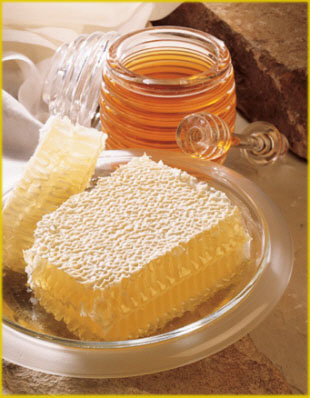
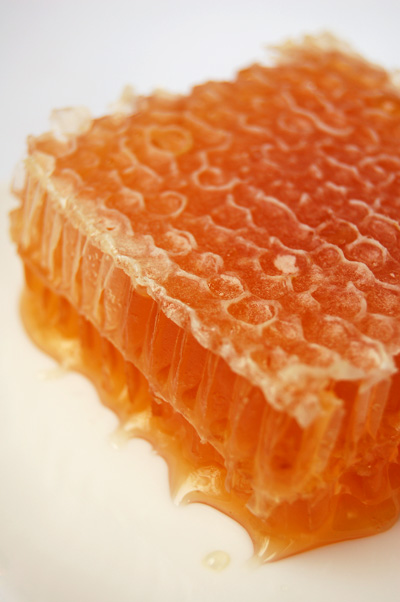
To make honey from nectar, honey bees evaporate much of the moisture and add compounds called enzymes that change the composition of the nectar. Some of the complex sugars are broken down into simpler ones; and some of the sugar is converted into an edible acid called gluconic acid. This process helps to give honey it's distinctive taste. When the moisture content of the honey is reduced to about 17%, the bees fill the small cells of the comb and seal them with a white beeswax capping. We can then remove the sealed combs from the beehives to use them on our table as comb honey or to have them extracted for use as liquid honey. You need not worry about eating the wax with the honey because beeswax is a completely wholesome product.
Honey flavors range from mild and bland to strong and pungent. The color ranges from black to white. Pigment (color) begins in the nectar at the plant and is transported back to the hive. It is intensified by the natural process that the bees put it through (reducing the moisture level, etc.). Darker colored honey does NOT mean lesser quality; it means a different source of nectar and a different taste of honey. By trying different honeys, you can find the ones you enjoy most. .
Comb honey is honey-filled beeswax comb as stored directly by the bees.
The facts are:
1. All honeys in containers are processed to some extent -- comb honey is the ONLY unprocessed honey.
2. LESS PROCESSED honeys (no heat applied) have more taste but can be susceptible to fermentation from sugar-tolerant yeasts which are always present in honey.
3. High temperatures used during processing (over 160 degrees) with filtration, tend to reduce granulation and help improve the looks of the products, however, natural enzymes are eliminated.
4. Straining or filtering IS NECESSARY (many different systems are in use) to present honey at it's best. Partially granulated honey on a shelf, sells very poorly.
5. Organic is a term that should not be used at all. Bees are nature's creatures and can not be controlled totally by beekeepers.
6. Just find a honey that looks and tastes good to you and enjoy!
Why Honey Instead of Sugar?
Honey has many unique flavors and is rich in history! It can be used in diverse ways from baked goods to a topping for cereal to a glaze for meat to a sweetener for tea. Honey is derived from the nectar of flowers and, unlike refined sugar, consists of various sugars which enter the blood stream at different times. It therefore has less effect on blood sugar levels than refined sugar.
When substituting honey for sugar in a recipe, begin by substituting honey for up to half of the sugar called for and reduce the amount of liquid in the recipe by 1/4 cup for each cup of honey added (note: because honey has more sweetening power than sugar, a reduced quantity of honey may be appropriate - adjust per your taste). Recipes containing honey need to be beaten longer and more vigorously than sugar recipes, and when baking with honey, add 1/2 teaspoon baking soda for each cup of honey used and lower the temperature by 25 degrees. Honey batter becomes crisp and browns faster than sugar batter. The floral source of the honey should be considered when cooking with honey since honey will impart some of it's flavor (darker, stronger honeys will allow more of a honey taste to come through in your finished product). Honey will provide a firmer, heavier texture.
Honey bees are vital to agriculture and the world's food supply. While gathering nectar to produce honey, bees are transferring pollen. The USDA estimates that one third of the food supply benefits from honeybee pollination.